Introduction
From Banner Automation in Paris to Ecommerce Automation in New York
Lacoste's relationship with Crop.photo started with a different image problem.
The Lacoste team in Paris adopted Crop.photo to automate the production of thousands of banner variations across digital advertising channels, formats, and languages. That workflow demonstrated how repetitive image-production rules could be turned into scalable automation instead of sending every variation back through a manual creative process.
Read the Lacoste Banner Automation Case Study
Following that success, Lacoste New York began using Crop.photo for another high-volume challenge: preparing on-model and product photography for their US Amazon A+ store and other wholesale ecommerce channels.
The ecommerce editorial images were already finished. The challenge was getting every image ready for the channel.



The Challenge
Amazon is an important ecommerce and wholesale channel for brands like Lacoste, but getting products onto Amazon seller marketplace involves more than uploading the original PDP photography.

Amazon applies detailed image standards to product listings. Main images, for example, generally need a pure white background, the product should occupy at least 85% of the frame, and images need sufficient resolution and acceptable file formats. Amazon also maintains category-specific requirements that can override general guidelines. Non-compliant imagery can contribute to image rejection or an Amazon listing suppression.
Amazon A+ Content adds another layer. Different A+ modules use different image dimensions and layouts, meaning brands need multiple properly prepared assets rather than one universal Amazon image.
For Lacoste New York, this created a production problem very similar to other wholesale channels: one set of source ecommerce photography had to become many precisely prepared ecommerce assets.
Lacoste works with both on-model fashion photography and standalone product imagery.
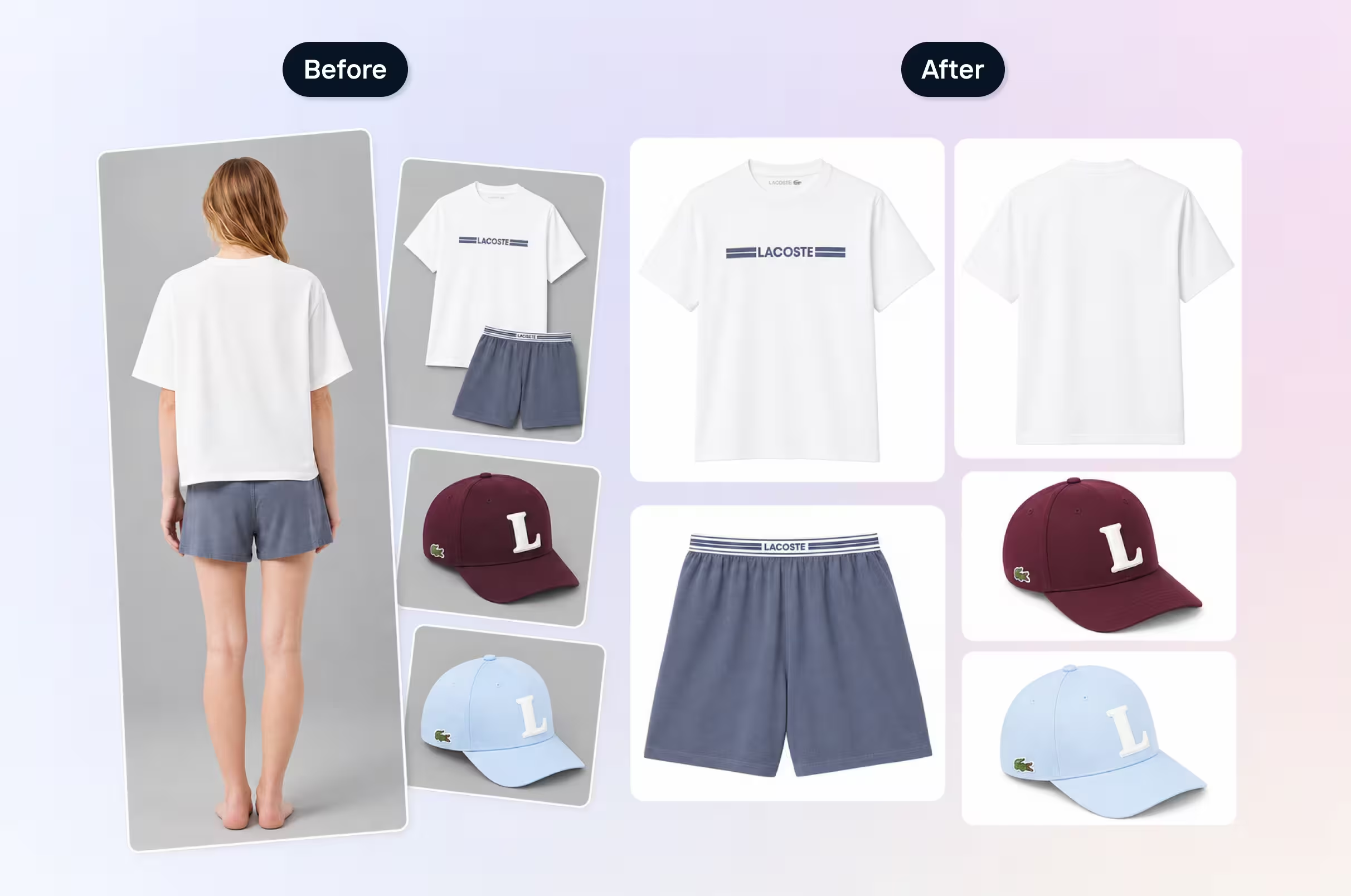
Those source assets are created for the brand, not specifically for every Amazon image placement or A+ module. Images therefore need to be resized, repositioned and cropped before delivery.
Different outputs can require different:
- Dimensions & aspect ratios
- Product positioning
- Margins
- Backgrounds
- Model crops
- Specific file specifications
Impact: What appears to be a simple resizing job becomes hundreds or thousands of individual production decisions across a collection.
Marketplace image requirements are not simply aesthetic preferences.
Amazon's current product-image guidance calls for main images on a pure white background and generally expects the product to occupy at least 85% of a 2000x2000 pixel frame. Amazon also recommends sufficiently large imagery for zoom and maintains additional category-specific rules.
That makes product placement and margins especially important.
A product placed too small wastes valuable canvas space. Too large, incorrectly cropped, incorrectly positioned, or on the wrong background can create a compliance issue.
On-model imagery introduces another challenge: crops need to be headless, between the eyes and nose, to comply with model-rights restrictions as well as Amazon’s image recommendations.
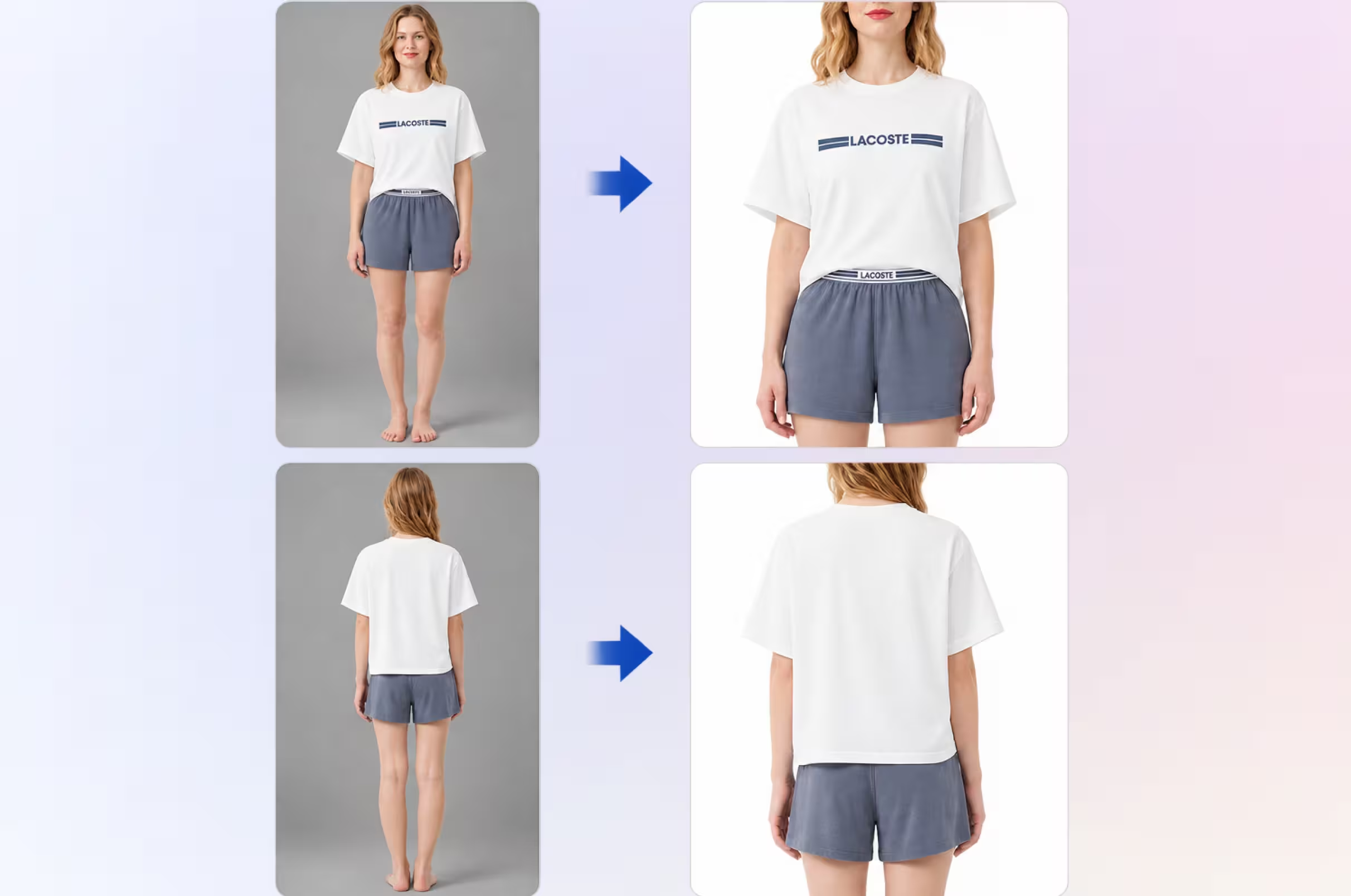
Impact: Manual operators have to repeatedly interpret the same Amazon requirements, increasing the opportunity for inconsistent outputs, rework, image issues and delayed listings.
Amazon actively checks marketplace content against its requirements.
When product imagery does not comply, the result is not simply an unattractive image. Amazon states that non-compliant images can lead to listing suppression and lost sales.
For an ecommerce operations team, that changes the nature of the problem.
An incorrect background, product fill, crop or technical specification can become a marketplace operations issue that somebody has to diagnose inside Seller Central, correct, re-export and upload again.
Impact: Every rejected or suppressed image creates another loop between ecommerce operations and image production, slowing the path from finished photography to a shoppable product.
Amazon may be a major channel, but Lacoste's imagery also needs to support other wholesale and ecommerce destinations.
And each retailer can have different requirements.
A source image suitable for Amazon may need a different aspect ratio, model crop, canvas, resolution or margin for another wholesale partner.
Without automation, each new destination adds another image-production workflow.
Impact: As channel count grows, image-production work grows with it, even though the original photography has not changed.
About Company
Founded in France in 1933 by tennis champion René Lacoste, Lacoste has grown from its sporting heritage into one of the world's most recognizable premium fashion and lifestyle brands. Best known for its iconic crocodile logo and signature polo shirts, the brand today spans apparel, footwear, leather goods, eyewear, fragrances and home collections.
Lacoste operates across its own ecommerce channels, marketplaces and wholesale partners worldwide. This creates a continuous need to adapt high-quality product and on-model imagery for different platforms, formats and regional requirements.
For Lacoste, the challenge is not simply producing more content. It is maintaining the brand's distinctive visual consistency while moving quickly enough to support the scale and complexity of modern digital commerce.
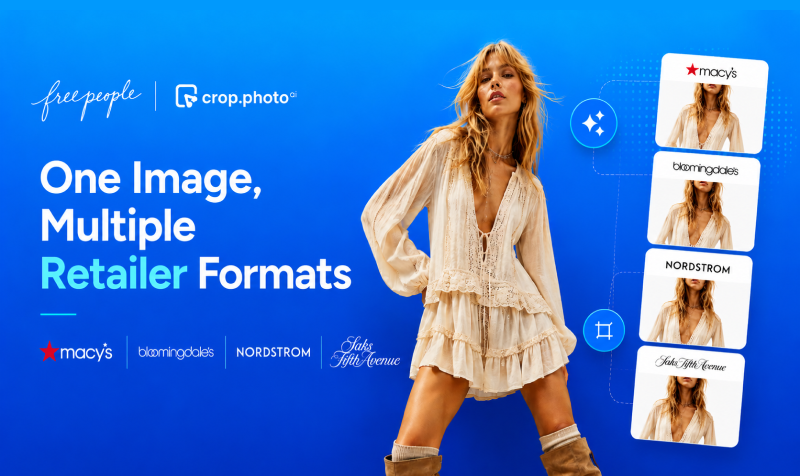
From Amazon to Every Retailer
Prepare apparel imagery once, then adapt it for each marketplace and wholesale partner using repeatable retailer-specific workflows.

The Solution
Lacoste New York uses Crop.photo to turn its original on-model and product photography into Amazon-ready and wholesale-ready assets using reusable image Recipes.
Instead of teaching an operator the same marketplace specification for every image, the specification becomes part of the workflow.
Lacoste can build dedicated Crop.photo Recipes around the Amazon product-image specifications it uses.
A Recipe can combine operations such as:
- Target canvas dimensions
- Product-to-canvas sizing
- Fixed or percentage-based margins
- Pure white background
- Automatic product alignment
- Resizing
- Output format
- Image quality requirements
Once the Recipe is created, Lacoste can apply the same production rules to an entire batch.
The Amazon specification stops being a document somebody has to repeatedly interpret.
It becomes automation.
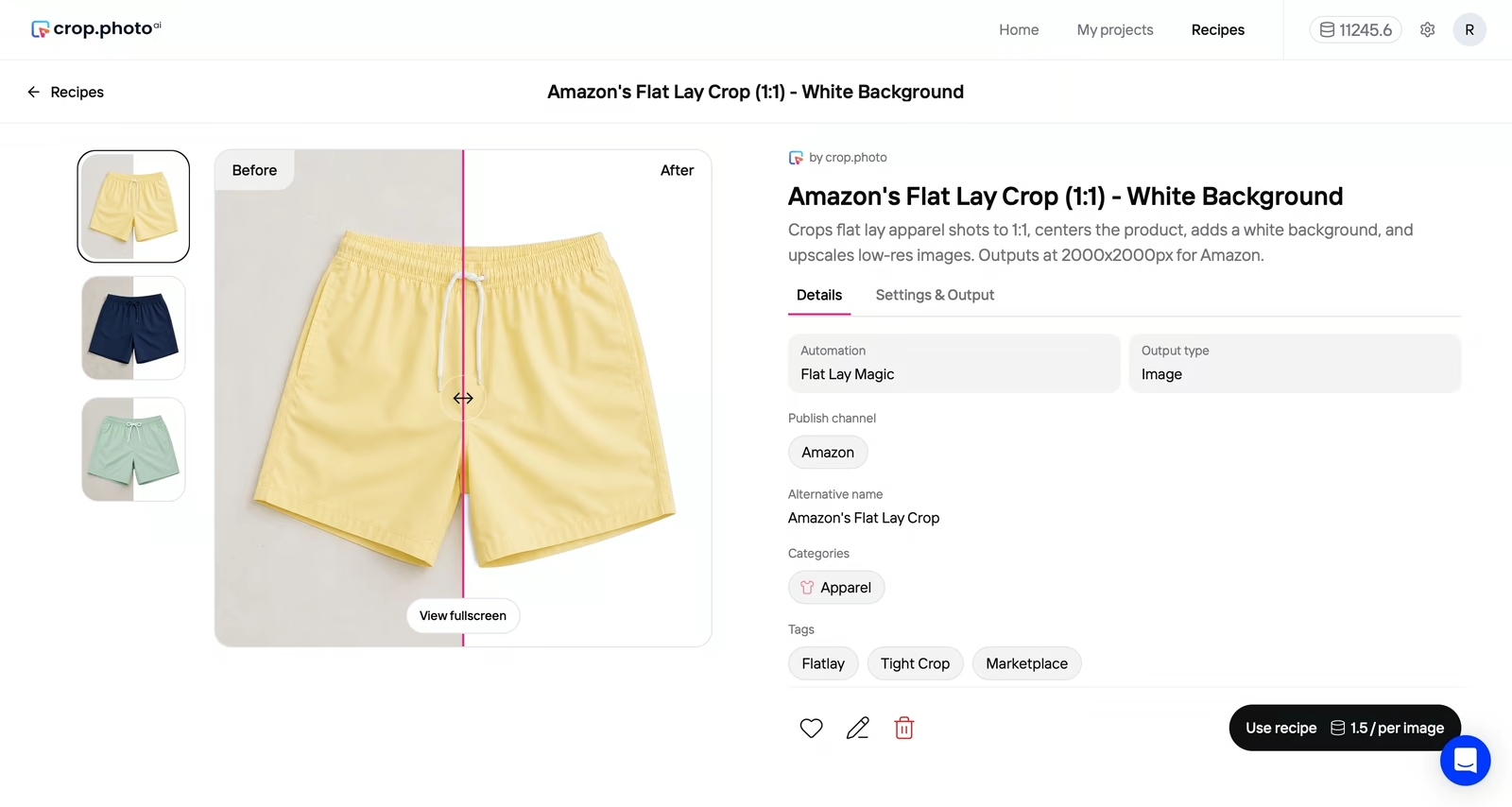
See it with your own image → Try the Amazon Product Image Recipe
On-model photography creates a different challenge. Models vary in height, position and pose, so a fixed crop cannot reliably produce consistent results.
Crop.photo uses face and body landmarks to apply pose-aware cropping, allowing Lacoste to maintain consistent framing while adapting to each individual image.
The Recipe can control:
- model position
- crop marker location
- subject scale
- top and bottom margins
- canvas dimensions
- output aspect ratio
That allows an entire collection of on-model imagery to follow the same Amazon-ready visual standard without an operator adjusting every photograph.
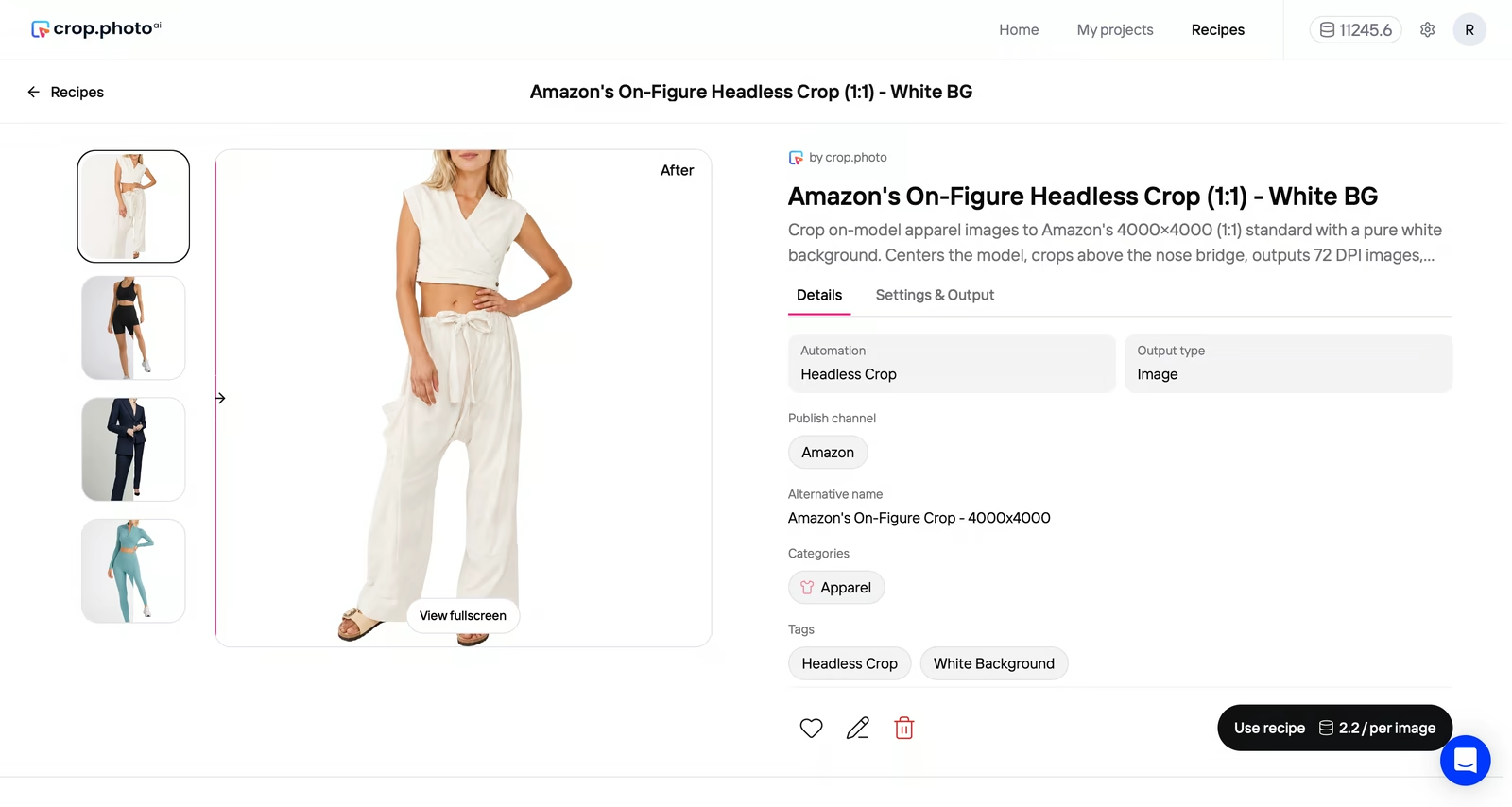
Upload an on-model image and see the crop automatically → Try the Amazon On-Model Recipe
A+ modules require imagery prepared for specific layouts and dimensions, so ecommerce teams often end up resizing and recomposing the same source photography again for enhanced product pages.
Lacoste can turn its commonly used A+ specifications into a reusable Crop.photo Recipe, with the required dimensions, composition, margins and output settings already built in.
Instead of rebuilding each asset whenever new products are launched, the team can run new photography through the same production workflow.
The same Recipe-based model extends beyond Amazon.
Lacoste can create workflows for other retailers and wholesale partners, each with its own dimensions, crop rules, margins and output requirements.
The original photography stays the same.
Only the Recipe changes.
One source asset. One Recipe per destination. Channel-ready images at scale.
Explore ready-made workflows for major retailers → Browse the Retailer Recipe Library
The real advantage appears when the workflow moves from one image to hundreds or thousands.
Instead of opening files individually, Lacoste applies its Recipe across the batch.
On-model shots follow the on-model rules.
Product shots follow the appropriate product-image requirements.
Channel-specific outputs can be created using the appropriate Recipe.
What used to be repetitive production work becomes a repeatable ecommerce operation.
Benefits
With Amazon and wholesale specifications converted into reusable Crop.photo Recipes, Lacoste's image workflow becomes easier to scale.
New product photography can move from approved source imagery to Amazon-ready output without waiting for every file to be manually resized, positioned and checked.
This helps shorten the path between a finished photoshoot and a live Amazon product page.
Amazon-ready imagery is not created by visually estimating the crop every time.
The same Recipe controls dimensions, margins, backgrounds and subject placement across the entire batch.
That produces a more consistent Amazon storefront and reduces variation introduced by manual editing.
By building Amazon's recurring image requirements into a reusable workflow, Lacoste can address common technical requirements before the files reach Seller Central.
The objective is simple:
Get the image right before Amazon has a reason to send it back.
That means less re-editing, fewer upload cycles and fewer marketplace operations interruptions.
Amazon is the current focus, but the architecture is not Amazon-specific.
The same source imagery can be transformed through Recipes for other retailers and wholesale partners.
Instead of adding production headcount as distribution expands, Lacoste adds another Recipe.
Results
Images Processed Per Month
Manual Editing Reduced
Amazon ASINs Supported/Year
Lacoste New York turned a recurring marketplace production task into an automated workflow.
On-model and product photography can now be adapted through reusable Recipes that encode the dimensions, crop, subject positioning, margins, backgrounds and other output rules required by Amazon and additional wholesale channels.
The result is a more repeatable path from finished photography to marketplace-ready imagery, with fewer manual decisions between the source asset and the product listing.
And it extends an automation story already underway inside Lacoste.
The Paris team used Crop.photo to transform banner production across formats and global advertising channels. Now Lacoste New York is applying the same principle to ecommerce operations.